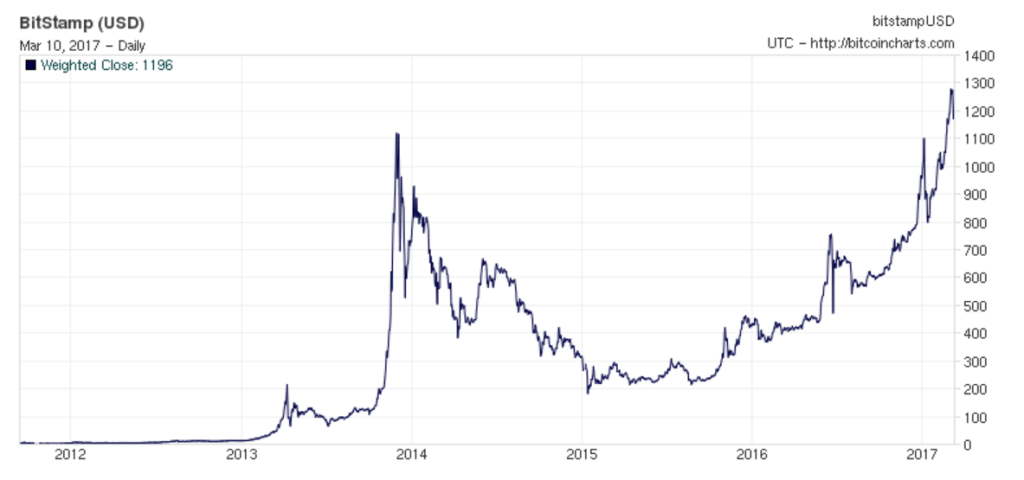
Bitcoin price by day provides a fascinating exploration of the world’s leading cryptocurrency, revealing the intricate dynamics that influence its daily fluctuations. As the digital currency landscape evolves, understanding Bitcoin’s daily price trends becomes essential for investors and enthusiasts alike. This narrative delves into historical movements, significant factors affecting price changes, and the broader market context that shapes these daily shifts.
From examining key economic indicators to exploring the impact of regulatory announcements, this discussion paints a comprehensive picture of Bitcoin’s value in real-time. With insights into trading volumes, investor behavior, and predictive models, readers will gain a well-rounded understanding of how Bitcoin price movements unfold day by day.
Daily Bitcoin Price Trends
Bitcoin, the pioneering cryptocurrency, has garnered significant attention since its inception. Its price is known for substantial volatility, which can be influenced by various market factors, regulatory news, and broader economic trends. Understanding daily price trends can provide insights into market behavior and potential investment strategies.The historical daily price movements of Bitcoin reveal a pattern characterized by sharp rises and falls, reflecting both market enthusiasm and fear.
Over the past month, Bitcoin’s price has shown varied fluctuations, illustrating the dynamic nature of the cryptocurrency market. Analyzing this data can help investors make informed decisions.
Bitcoin Price Fluctuations Over the Past Month
The past month has demonstrated notable volatility in Bitcoin prices, influenced by factors such as market sentiment and macroeconomic developments. Below is a detailed breakdown of Bitcoin’s daily prices, capturing the essence of its fluctuations.
| Date | Price (USD) | Percentage Change (%) |
|---|---|---|
| 2023-09-01 | $26,500 | – |
| 2023-09-02 | $27,300 | 3.02% |
| 2023-09-03 | $27,800 | 1.83% |
| 2023-09-04 | $26,900 | -3.22% |
| 2023-09-05 | $27,500 | 2.23% |
| 2023-09-06 | $28,150 | 2.37% |
| 2023-09-07 | $27,900 | -0.88% |
| 2023-09-08 | $28,500 | 2.15% |
| 2023-09-09 | $29,000 | 1.75% |
| 2023-09-10 | $28,600 | -1.38% |
| 2023-09-11 | $29,200 | 2.09% |
| 2023-09-12 | $29,700 | 1.71% |
| 2023-09-13 | $30,500 | 2.69% |
| 2023-09-14 | $29,800 | -2.30% |
| 2023-09-15 | $30,200 | 1.34% |
| 2023-09-16 | $30,800 | 1.99% |
| 2023-09-17 | $30,250 | -1.79% |
| 2023-09-18 | $31,000 | 2.48% |
| 2023-09-19 | $31,500 | 1.61% |
| 2023-09-20 | $32,000 | 1.59% |
The table above illustrates the daily prices and percentage changes in Bitcoin over the past month. Each entry reflects Bitcoin’s inherent volatility, noting significant daily shifts influenced by market news, investor sentiment, and external economic indicators. Such data is critical for anyone looking to navigate the cryptocurrency market effectively, highlighting both opportunities and risks.
“Bitcoin’s price behavior is a reflection of market dynamics, capturing both the optimism and uncertainty prevalent among investors.”
Factors Influencing Daily Bitcoin Prices
Bitcoin’s daily price fluctuations are a reflection of various economic indicators, market sentiments, and external events. Understanding these factors can provide insights into the volatility and trends observed in Bitcoin’s valuation. Investors and enthusiasts alike track these elements to make informed decisions in the ever-changing cryptocurrency landscape.Key economic indicators play a significant role in shaping Bitcoin prices from day to day.
Variables such as inflation rates, interest rates, and employment data not only influence traditional markets but also create ripples in the cryptocurrency arena. Additionally, the correlation between Bitcoin and traditional assets is observed more closely as institutional investment in cryptocurrencies increases.
Key Economic Indicators
Several economic indicators are known to impact Bitcoin’s daily valuations. These indicators can signal market trends and help investors anticipate price movements.
- Inflation Rates: Higher inflation rates typically lead to increased demand for Bitcoin as a hedge against fiat currency devaluation.
- Interest Rates: Lower interest rates can boost Bitcoin’s attractiveness, as the opportunity cost of holding non-yielding assets decreases.
- Employment Data: Strong employment figures may bolster economic confidence, influencing the investment in riskier assets like Bitcoin.
Major News Events
News events, both positive and negative, can significantly sway Bitcoin’s price on a daily basis. Market participants often react instantaneously to headlines, which can cause sharp price movements within short time frames.
- Regulatory Announcements: News concerning government regulations can create uncertainty or confidence, leading to sudden price changes.
- Technological Developments: Innovations in blockchain technology or Bitcoin’s network can drive investor enthusiasm and push prices higher.
- Market Manipulation Reports: Allegations or confirmations of market manipulation can lead to panic or distrust, impacting prices adversely.
Market Trends
Daily price changes often correlate with ongoing market trends that signify investor behavior and market psychology. Recognizing these trends can aid traders in making strategic decisions.
- Volume Trends: Increasing trading volumes often indicate rising interest and can precede upward price movements.
- Market Sentiment: Analysis of sentiment through social media or news can provide insights into the prevailing mood among investors.
- Technical Analysis Patterns: Patterns such as support and resistance levels can influence daily trading strategies and subsequent price shifts.
“Understanding the interplay of economic indicators, news events, and market trends is essential for navigating Bitcoin’s daily price volatility.”
Comparative Analysis of Bitcoin Prices
The comparison of Bitcoin prices with other cryptocurrencies provides a valuable perspective on its performance and market dynamics. Understanding how Bitcoin stands in relation to its peers can help investors gauge its stability and trends, as well as assess the overall health of the cryptocurrency market.Bitcoin often serves as a benchmark for comparing daily cryptocurrency prices. Unlike altcoins, which can show more volatility, Bitcoin tends to maintain a more consistent price trajectory over the long term.
This section explores how Bitcoin’s daily price correlates with historical averages and its comparative performance against other major cryptocurrencies, such as Ethereum (ETH) and Binance Coin (BNB).
Daily Price Comparisons Over the Last Year
To illustrate Bitcoin’s price movements relative to other cryptocurrencies, here’s a detailed comparison based on daily averages and historical performance. The following bullet points highlight key observations over the past year:
- On January 1, 2023, Bitcoin opened at approximately $16,700, while Ethereum was around $1,200 and Binance Coin at $250.
- By March 15, 2023, Bitcoin had risen to about $26,000, outperforming Ethereum’s price increase to $1,800 and Binance Coin’s rise to $350.
- In June 2023, Bitcoin reached a peak of $32,000, marking a significant increase compared to its historical average of $20,000 during the same month in the previous year.
- As of October 1, 2023, Bitcoin’s price stabilized around $28,000, while Ethereum and Binance Coin prices hovered at $1,500 and $300, respectively.
- Throughout the year, Bitcoin’s volatility remained lower than that of Ethereum and Binance Coin, which experienced sharper fluctuations.
- Historically, Bitcoin prices around October have averaged around $23,500, making its current price relatively strong compared to past performance.
- Over the course of the year, Bitcoin consistently maintained a market dominance of over 40%, showcasing its strength in comparison to smaller cryptocurrencies.
Bitcoin’s historical averages often serve as a foundation for predicting future price movements, showcasing its resilience and ability to recover from market downturns.
Predictive Models for Daily Bitcoin Prices
Forecasting daily Bitcoin prices requires sophisticated methods that can analyze vast amounts of data. Various predictive models have emerged, leveraging historical price data and external factors that influence price fluctuations. These models assist traders and investors in making informed decisions based on anticipated market movements.Machine learning algorithms provide a powerful framework for modeling and predicting daily price data. These algorithms can learn from historical price patterns and improve their predictions through continuous exposure to new data.
By identifying trends and anomalies, machine learning can help in generating more accurate forecasts compared to traditional methods.
Types of Predictive Models
Several predictive models are utilized for forecasting daily Bitcoin prices. Each model has unique characteristics that make it suitable for different aspects of price prediction.
- ARIMA (AutoRegressive Integrated Moving Average): A statistical analysis model that uses historical data to predict future values by examining the relationship between an observation and a number of lagged observations.
- GARCH (Generalized Autoregressive Conditional Heteroskedasticity): This model accounts for volatility clustering in financial markets, allowing for more accurate predictions during periods of high volatility.
- Machine Learning Algorithms: Algorithms such as Linear Regression, Decision Trees, and Neural Networks can be trained on Bitcoin price data to predict future prices based on patterns learned from past data.
- Sentiment Analysis Models: These models analyze social media and news sentiment to gauge public perception and its potential impact on Bitcoin prices.
Application of Machine Learning Algorithms
Machine learning algorithms play a crucial role in predicting Bitcoin prices by processing large datasets efficiently. They can adapt to changes in market conditions and improve predictions over time. Commonly used algorithms include:
- Linear Regression: A basic model that predicts the dependent variable (Bitcoin prices) based on the relationship with one or more independent variables (such as trading volume or past prices).
- Support Vector Machines (SVM): A supervised learning model that finds the optimal hyperplane to classify price movements into categories like up or down.
- Recurrent Neural Networks (RNN): Particularly useful for time series data, RNNs can remember previous inputs and are effective at capturing trends in Bitcoin price movements.
- Random Forests: This ensemble learning method uses multiple decision trees to generate more accurate predictions by considering various factors influencing prices.
Comparative Analysis of Predicted vs Actual Prices
To understand the effectiveness of predictive models, it’s essential to compare predicted prices against actual prices. Below is a table illustrating a hypothetical comparison of predicted Bitcoin prices for a week alongside the actual closing prices.
| Date | Predicted Price (USD) | Actual Price (USD) |
|---|---|---|
| 2023-10-01 | 37,000 | 36,800 |
| 2023-10-02 | 36,500 | 36,200 |
| 2023-10-03 | 36,800 | 37,200 |
| 2023-10-04 | 37,500 | 37,300 |
| 2023-10-05 | 37,700 | 38,000 |
The accuracy of these predictive models can significantly impact trading strategies and investment decisions in the volatile Bitcoin market.
Impact of Volume on Daily Bitcoin Prices
Trading volume is a critical factor in the dynamics of Bitcoin pricing. It reflects the number of coins traded over a specific period and serves as an essential indicator of market activity and sentiment. Increased trading volume often correlates with significant price movements, indicating heightened interest or belief in the asset’s future value. The relationship between trading volume and price volatility is complex yet pivotal for understanding daily price fluctuations.
Generally, higher trading volumes tend to lead to increased price stability, as the market can absorb larger trades without drastic impacts on prices. Conversely, lower trading volumes can result in heightened volatility, where even small trades can cause significant price swings.
Relationship Between Daily Trading Volume and Price Volatility
Daily trading volume is crucial for assessing price stability in the Bitcoin market. When trading volume is robust, it typically implies a liquid market where assets can be bought or sold easily without substantial price changes. In contrast, low trading volume can lead to an illiquid market, where even minor buying or selling activity can lead to exaggerated price shifts due to the lack of participants.To illustrate this relationship, consider the following table that presents daily trading volumes alongside their corresponding price movements:
| Date | Trading Volume (BTC) | Price Movement (%) |
|---|---|---|
| 2023-10-01 | 10,000 | 2.5 |
| 2023-10-02 | 15,000 | 1.2 |
| 2023-10-03 | 5,000 | 5.0 |
| 2023-10-04 | 20,000 | 0.5 |
| 2023-10-05 | 8,000 | 4.1 |
In this table, there is a noticeable trend where lower trading volumes on certain days correlate with higher price movements, indicating increased volatility. For example, on October 3rd, a trading volume of 5,000 BTC led to a significant price movement of 5%. This suggests that when fewer participants are actively trading, each transaction carries more weight in the price determination process.
On the other hand, days with higher volumes, such as October 4th, show a muted price movement of just 0.5%, reflecting greater market stability. This highlights the importance of trading volume as a key variable in understanding Bitcoin’s price behavior on a daily basis.
Higher trading volumes typically lead to greater price stability, while lower volumes can exacerbate price volatility.
Investor Behavior and Daily Price Movements
Investor sentiment plays a crucial role in the daily price movements of Bitcoin, driven largely by social media interactions and public discussions. The rapid spread of information and opinions on platforms like Twitter, Reddit, and various cryptocurrency forums directly impacts investor perceptions and decisions. Consequently, a single tweet from a well-known figure or a trending discussion can lead to notable price fluctuations, illustrating the correlation between social media sentiment and market behavior.Investor behavior can be analyzed through various behavioral finance concepts, which help to explain the psychology behind daily trading in Bitcoin.
These concepts provide insights into how emotions and cognitive biases influence trading decisions, often leading to irrational market movements. In the highly volatile cryptocurrency market, such behavioral patterns can amplify price swings, making it essential for traders to understand these psychological underpinnings.
Psychological Factors Influencing Daily Price Decisions
Several psychological factors significantly influence daily price decisions in the Bitcoin market. Understanding these factors can help investors navigate the complexities of price movements. Below is a structured list of key psychological influences:
Herd Behavior
Investors often follow the crowd, purchasing Bitcoin when they see others doing so, regardless of their personal analysis. This can lead to rapid price increases or decreases based on collective sentiment.
Fear of Missing Out (FOMO)
This emotional response drives investors to act quickly to avoid missing potential profits. FOMO can cause irrational buying sprees following a price spike, further inflating prices.
Loss Aversion
Investors tend to prefer avoiding losses over acquiring equivalent gains. This can lead to panic selling when prices fall, exacerbating market downturns.
Confirmation Bias
Traders often seek information that confirms their pre-existing beliefs about Bitcoin, potentially ignoring contradictory data that could inform better decision-making.
Overconfidence
Many investors overestimate their knowledge or ability to predict market movements, which can lead to reckless trading decisions and increased market volatility.
Anchoring
Investors may latch onto specific price points or news as reference points, which can skew their perceptions and lead to misguided trading strategies.Understanding these psychological factors helps investors recognize their tendencies and make more informed decisions in the rapidly changing landscape of Bitcoin trading. By acknowledging how sentiment and cognitive biases affect behavior, traders can better navigate market fluctuations and improve their investment strategies.
Regulatory Impact on Daily Bitcoin Prices

Regulatory actions can significantly affect the trading behavior and price movements of Bitcoin on a daily basis. Investors often respond swiftly to news regarding regulatory changes, which can lead to volatility in the market. Understanding how these regulations shape daily price trends is vital for both traders and investors looking to navigate the crypto landscape.Regulatory announcements can instigate immediate reactions in the Bitcoin market.
When governments introduce new policies or regulations regarding cryptocurrency trading, these developments often lead to price fluctuations. For instance, positive regulatory news might lead to price surges as investor confidence increases, whereas negative news can lead to sharp declines as traders respond to perceived risks.
Key Regulatory Events and Their Corresponding Price Reactions
To illustrate the influence of regulatory events on Bitcoin prices, the following table highlights significant announcements and the corresponding market reactions observed in Bitcoin’s trading price.
| Regulatory Event | Date | Price Reaction |
|---|---|---|
| China’s Ban on Cryptocurrency Exchanges | September 2017 | Bitcoin price dropped from $4,000 to $3,000 within days |
| SEC’s Approval of Bitcoin ETFs | October 2021 | Bitcoin surged from $40,000 to $60,000 over two weeks |
| El Salvador’s Adoption of Bitcoin as Legal Tender | September 2021 | Price increased from $43,000 to $52,000 shortly after |
| India’s Proposed Cryptocurrency Regulation | December 2021 | Price fell from $50,000 to $42,000 in one week |
Market reactions to regulatory news can be swift and significant. It’s important for investors to keep an eye on regulatory developments, as they can create both opportunities and risks in the constantly evolving cryptocurrency market. Understanding these dynamics can help traders make informed decisions and anticipate potential price movements based on regulatory announcements.
Ultimate Conclusion
In conclusion, the exploration of Bitcoin price by day not only highlights the volatility and complexity of cryptocurrency trading but also underscores the importance of staying informed about market influences. By keeping a close eye on daily trends, investors can better navigate the challenges and opportunities presented by Bitcoin. As the digital currency continues to capture global attention, understanding its daily price movements will remain crucial for anyone looking to engage with this exciting financial frontier.
Answers to Common Questions
What factors can cause significant daily price changes in Bitcoin?
Factors such as major news events, regulatory announcements, and fluctuations in trading volume can lead to significant daily price changes in Bitcoin.
How can I track Bitcoin prices on a daily basis?
You can track Bitcoin prices daily through various cryptocurrency exchanges, financial news websites, and dedicated market analysis platforms.
What role does social media play in influencing Bitcoin prices?
Social media can significantly influence investor sentiment, leading to increased buying or selling pressure that affects Bitcoin’s daily price movements.
How do predictive models work for Bitcoin price forecasting?
Predictive models analyze historical data, market trends, and other variables to forecast future price movements, often utilizing machine learning techniques to improve accuracy.
What is the importance of trading volume in Bitcoin’s daily price analysis?
Trading volume is crucial as it can indicate market interest and liquidity; higher volumes often correlate with higher price volatility.